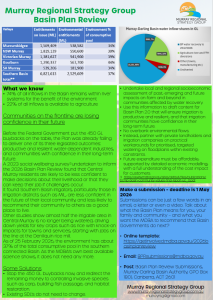
In the regions where water recovery has been most concentrated, the Plan is failing to deliver its legislated socioeconomic outcome: productive and resilient water-dependent industries, and communities with confidence in their future.
The environment now controls 37% of the consumptive pool in the southern connected Basin, including water purchased towards the 450 GL target as of 25 February 2026.
The reduction in water availability and consequent upward pressure on allocation prices is undermining the viability and resilience of water-dependent industries. This has flow-on impacts to towns including jobs in food processing, transport and agribusiness services, and on community and irrigators’ confidence in their future.
For example, large areas of rice production only occur ‘when water allocation prices are below $120 – $150 per ML. But water recovery is distorting the water market, driving up allocation prices. Delivering the Basin Plan ‘in full’ means farmers paying $170/ML more on average every year than they would without water recovery. As rice becomes unaffordable to grow, Riverina towns are at high risk of an annual $400 million a year economic loss in jobs and services if SunRice offshores its local manufacturing.
In the dairy industry, higher allocation prices similarly drive down milk production and farm expenditure, which reduces income for local suppliers of feed, fodder, fertiliser, fuel, mechanical repairs and other rural contractors.
Water recovery also poses a significant sovereign food risk to sustaining production through climate and other shocks. The 189.6 GL purchased towards the 450 GL at 25 February 2026 has left fixed plantings below the Barmah Choke – nuts, grapes, citrus, stonefruit and olives – almost 500 ML short of their water needs under the dry scenario currently forecast for 2026-276, even if fixed plantings got all the water allocated.